 PARTY

A rigid cup can support repeat use only when its construction, intended contact and care route are documented and communicated. For an importer, retailer or event supplier, the useful comparison connects the customer-facing result with details that development, production and inspection teams can observe. The brief should separate product construction, pack contents, application assumptions and any claim that needs evidence.
Specify reusable plastic cups by actual material, dimensions, capacity basis, rim and base, print system and product-specific care instructions. The buying specification should record upper and base diameter, height, brimful capacity, practical fill level, unit mass and pack count. Approve a representative physical sample and its retail pack together; a catalogue image or category name cannot prove fit, function, customer coverage or shipment condition.
1. Define what reusable means for the selected cup program
Define beverage type, serving temperature, use environment, collection and washing plan before choosing construction or promoting a reuse program. Define the destination market, sales channel, user group, quantity and required warehouse date before requesting a final quotation. Record upper and base diameter, height, brimful capacity, practical fill level, unit mass and pack count. If the intended application, material or pack changes after sampling, reopen the affected approval rather than treating the revision as an equivalent substitute.
Reusable is a use model, not a visual style. A rigid cup may be intended for repeated household use, a short event return program or a souvenir that customers take home. Define the beverage, serving temperature, venue, washing route and expected customer message before choosing the product. Avoid assigning an arbitrary number of reuse cycles unless the selected cup has been evaluated under a relevant, documented method that matches the claim.
The destination market and food-contact application need to be part of the RFQ. Identify whether the cup will contact cold drinks, warm drinks, acidic beverages or another defined use. Confirm the actual polymer and any colorant, print or coating on the selected version. A generic material statement from a different cup does not establish the suitability of a decorated PartyHue SKU for the intended conditions.
Use the PartyHue product range to identify a physical reference, then place the selected construction, market and intended application in the same RFQ.
2. Specify capacity, polymer route, decoration and care together
Capacity should be described in more than one way. Record the brimful value only if it is useful, then define the practical serving line or intended fill. Add top diameter, base diameter, height, wall construction, nominal unit mass and any molded graduation. Product photography should show scale and should not place a liquid line above the practical service level merely to make the cup look larger.
Decoration can change performance and care. State whether color is molded into the material, printed on the surface, applied as a label or created with another documented route. Approve rub behavior, print position and the care language for that finish. If the cup is not designed for a dishwasher, microwave or hot beverage, do not let lifestyle photographs imply those uses. Clear exclusions build more trust than an unsupported all-purpose claim.
Minimum details for a comparable quotation
- Actual resin or material construction, wall, rim, base, dimensions, unit mass and finish.
- Brimful capacity, practical fill reference, intended beverage and contact conditions.
- Print method and area, artwork, product-specific care, washing and storage information.
- Stack or sleeve count, nesting, barcode, instructions, inner pack, carton dimensions and return-logistics assumptions.
Model the cup program around total use, not the cheapest unit
For reusable cups, unit price is only one part of the operating decision. A venue may also need collection bins, washing capacity, storage crates, inventory loss allowance and labor for redistribution. A retail program needs care instructions and packaging that explains practical capacity. Put those responsibilities beside the factory quotation so a low cup price is not mistaken for a complete reuse system.
Compare offers at the same cup mass, dimensions, polymer route, color, decoration and sleeve quantity. A lighter cup or different nesting depth can change feel, freight volume and service behavior. Ask for the final decorated carton dimensions instead of extrapolating from plain samples. If a lid or accessory is important, quote it as a tested compatible SKU and do not allow diameter alone to stand in for fit approval.
MOQ discussions should identify whether molded color, print, packaging or the base cup drives the minimum. A first launch may use an existing cup color with custom print, while a mature program may justify a custom resin color. Keep those options visibly separate in the quote and sample file. Environmental marketing should be reviewed independently from price; a cheaper pack does not make a broad sustainability claim more accurate.
Build a simple loss and replenishment assumption for event programs. Cups may leave the venue, become damaged, remain in cleaning or be held as reserve stock. The reorder point therefore should not rely only on attendance. Record issued, returned, rejected and available quantities after representative events. This operational evidence helps the buyer choose pack size and storage without claiming a fixed reuse count that the product and program have not established.
For retail launch reviews, place the proposed care panel next to the decorated cup and ask a colleague to explain the permitted uses without additional guidance. If the answer differs from the intended product conditions, revise the wording or imagery. This simple comprehension check can reveal that a lifestyle photograph implies heat, dishwasher or microwave use that the approved information does not support.
Questions to resolve before the purchase order
- Are practical serving capacity, brimful capacity, cup dimensions and unit mass stated using agreed methods?
- Does every quote use the same polymer, color route, decoration, sleeve quantity and care assumptions?
- Has the buyer budgeted collection, washing, storage and expected inventory loss for the intended reuse model?
- Are environmental statements limited to specific facts supported for the product and operating program?
3. Test the rim, base, nesting and beverage application
Reuse depends on a managed use-and-care system
Review the cup under the intended serving and documented care conditions, then plan collection, washing, inspection and storage. Do not infer dishwasher suitability or an unlimited number of cycles from stiffness or appearance.
Risks include rough rims, unstable bases, cups locking when nested, print wear, inaccurate capacity, unsupported dishwasher claims and a reuse message without collection or care instructions. Record the sample condition, method and result instead of using a vague pass/fail note. Link photographs and observations to the exact SKU, size, color or batch that was reviewed.
Use the intended beverage and service temperature for an application observation. Check rim feel, grip, base stability and visible deformation, then wash or clean the sample according to the proposed instructions. Nest and separate a full sleeve to see whether cups lock together or scratch decorated surfaces. These observations answer practical buyer questions without converting one informal trial into a certification or lifetime guarantee.
4. Inspect molded cups by cavity, color and finished retail pack
Measure dimensions and capacity, inspect rim and base, review relevant food-contact information, and perform only the care or durability observations defined for the selected product. Shipment inspection should also verify clean packing, nesting separators where needed, print version, care insert, count and carton compression. Ask which sample, artwork revision and measurement method the inspector will use. Any report or certificate should apply to the selected product and destination requirements rather than being presented as a general factory endorsement.
Molded products can vary by cavity and production setting, so samples should not all come from one convenient position. Compare dimensions, unit mass, color and surface across a defined selection. Inspect gates, flash, rim edges, base flatness and visible contamination. When print is added, check registration around the tapered body and whether nested packing rubs one cup against another.
Count and pack checks should use sellable sleeves, not loose cups. Verify the number of cups, protective separators where specified, instruction or care panel, barcode and lot identity. If the retail claim depends on a collection or return program, that program belongs to the buyer's operation and should not be presented as a factory feature of the cup itself.
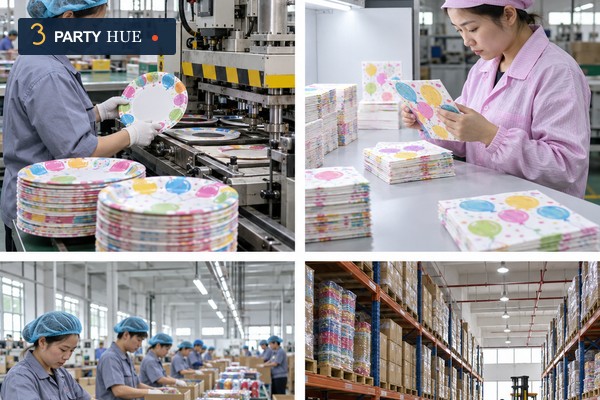
Have a physical reference, quantity and target market? Send the selected product details to PartyHue before approving bulk production.
5. Plan service, collection and cleaning before making claims
Serve the representative beverage at a realistic fill level and operate the planned collection and care workflow before describing the cup as part of a reusable event system. Prepare one realistic setup using only the contents of one retail unit unless the image clearly states that multiple packs are shown. Record tools, supports, preparation time and supervision needs. Follow the selected product's instructions and relevant venue or destination-market requirements.
For event use, map the cup from issue to recovery. Decide whether customers keep it, return it for washing or exchange it for a clean cup. Provide enough collection points and avoid mixing the reusable program with disposable waste. A cup can be technically durable yet deliver no environmental benefit if the event has no practical system for collection, washing and redistribution.
Care instructions should be visible and realistic for the channel. A retail customer may need washing temperature or top-rack guidance supported by the selected product information; a venue team may need labeled crates and separation of clean and used stock. Green wording should describe the actual product and program rather than suggesting that every use automatically reduces impact. The FTC environmental claims resource linked below helps frame cautious marketing language.
6. Illustrative case: a nominal capacity that confused customers
Illustrative sourcing case: an event operator chooses a rigid cup and plans to call it dishwasher safe. The supplier information covers food contact but not that washing claim. The buyer limits the wording, confirms a documented care route and tests the operational collection flow. The buyer records the decision in the specification, requests a revised physical sample and updates the listing before production. This hypothetical exercise explains a procurement method; it is not a PartyHue customer testimonial or a claimed sales result.
The revised listing distinguishes brimful capacity from the recommended serving volume and shows the fill line in a real hand-held photograph. The buyer also tests the selected lid or accessory separately rather than assuming compatibility from diameter alone. This change reduces customer confusion without changing the molded cup and gives the warehouse a clearer SKU description.
7. Control nested packing, abrasion and warehouse receiving
Control nesting pressure, protect rims and printed surfaces, and keep food-contact items clean and separated from loose decorative goods. Before release, reconcile sellable-unit count, SKU label, barcode or destination identification, inner packing and carton marks with the purchase order. A visually correct sample is not shipment-ready when pack data or carton protection differs from the approved route.
Nested cups save volume but create pressure and abrasion risks. Define sleeve quantity, nesting depth, any separator and the orientation inside the carton. Over-compression can make cups difficult to separate or mark decorated surfaces; too little restraint lets stacks move and damage rims. Carton dimensions and gross weight should be measured from the final pack, not calculated from an unpacked sample.
At receiving, open cartons from more than one pallet position and inspect sleeves before separating cups. Confirm count, color, decoration, rim, base, nesting and practical capacity. Retain one unopened sleeve and one marked evaluation set. If odors, transfer or deformation are reported, record storage conditions and carton identity so the issue can be distinguished from an isolated handling event.
Receiving checks for the approved product
At receiving, keep one retail unit unopened and use another for the agreed fit, assembly or application check. Compare material statement, dimensions and capacity, rim and base, print, nesting, care information, pack count and carton condition with the retained reference. Photograph discrepancies before altering the product, identify the affected carton or lot where available, and distinguish transit damage from construction or packing observations. For a reorder, approve changes to material, dimensions, artwork, components or pack count as controlled revisions.
For an independent reference relevant to this product, see the U.S. FDA food-contact packaging information. Apply independent guidance to the exact material, construction, intended use and destination rather than treating a category page as approval for every SKU.
Additional independent references
8. Buyer FAQ
Does rigid plastic automatically mean reusable?
No. Review construction, intended use, care information and the actual collection and washing system.
Can every reusable cup go in a dishwasher?
Only make that claim when the selected product's information and evidence support the specified conditions.
How should capacity be stated?
Separate brimful measurement from a practical beverage fill with headspace.
Can a reusable cup be called eco-friendly?
Use a specific, supportable statement about material, durability or the buyer's return system instead of a broad environmental benefit. The outcome depends on manufacturing, transport, washing, number of uses and end-of-life route.
Should a quotation use brimful or serving capacity?
State both when relevant and define the measurement method. The customer-facing size should match the practical beverage portion, while brimful capacity can remain a technical reference rather than the main promise.
How should printed cups be packed?
Approve the nesting depth, sleeve count, separators and carton orientation on fully decorated cups. A packing route that works for plain molded samples may scuff print or labels during export handling.
Conclusion
Send PartyHue your beverage, capacity, resin route, print, care plan and event quantity for a cup review. For related sourcing questions, see the PartyHue buyer FAQ or send the exact product reference, quantity, destination market and required date to info@partyhue.com.
READY TO PLAN THE NEXT ORDER?