 PARTY
PARTY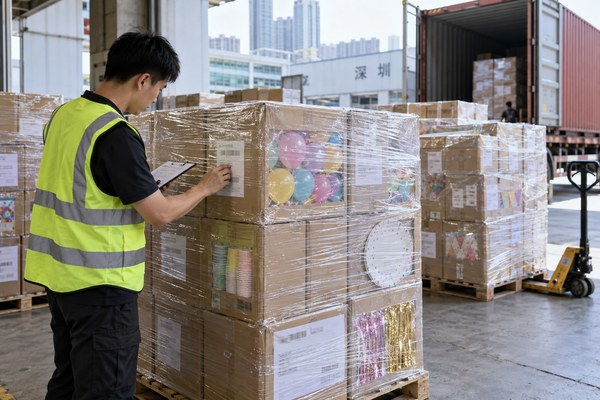
Importing party supplies from China is a sequence of linked decisions, not a single purchase. Product selection, compliance scope, sampling, payment, export packing, inspection and freight timing all need to support the intended market launch. Planning these steps early reduces expensive changes after production starts.
1. Define the buying decision before requesting a quote
Work backward from the launch date. Allow time for brief review, sample iteration, artwork approval, production, inspection, booking and transit. Seasonal party programs have a fixed selling window, so an early question about timing is often more valuable than an early question about unit price.
For an accurate comparison, connect the product to the commercial outcome: the sales channel, customer profile, purchase quantity, required date and the way the item will be presented. Use our party supplies product range to shortlist categories, then carry those details into one controlled buying brief.
2. Build a specification a factory can act on
Strong sourcing work makes assumptions visible. The following points give a factory enough context to identify a viable route, prepare a relevant sample and explain which variables affect cost or timing.
- Target market, sales channel, product category, quantity and required delivery date.
- Product and packaging specifications with applicable market or retailer requirements.
- Sample approval, quality checkpoints, payment milestone and shipment-release process.
- Forwarder contact, delivery term, carton data, labels and import documentation needs.
Keep the buyer requirements in a versioned file. If the order changes, update the file rather than relying on a message thread. This simple habit makes the sample, quotation and shipment inspection easier to compare.
3. Use factory testing to reduce rework
The factory contribution is strongest when the buyer brief is complete enough to identify risks before production. That includes customer requirements, not only a product picture: retailer labels, pack count, target market, launch date and the way goods will be received.
Turn approval into an observable process
For import party supplies from China, the useful question is not simply whether a supplier performs quality control. Ask which checkpoint applies to the item, who owns the reference sample and what happens if a result differs from the approved brief. A photo alone is not a release decision; it should be tied to a sample, count, measurement, print reference or packing instruction that both sides can identify.
Keep the commercial and technical records connected. The quotation should describe the same pack count, material, artwork version and outer-carton assumption used for the sample. When a customer requirement changes, note the change before production continues. This creates a practical audit trail without turning a straightforward party program into unnecessary paperwork.
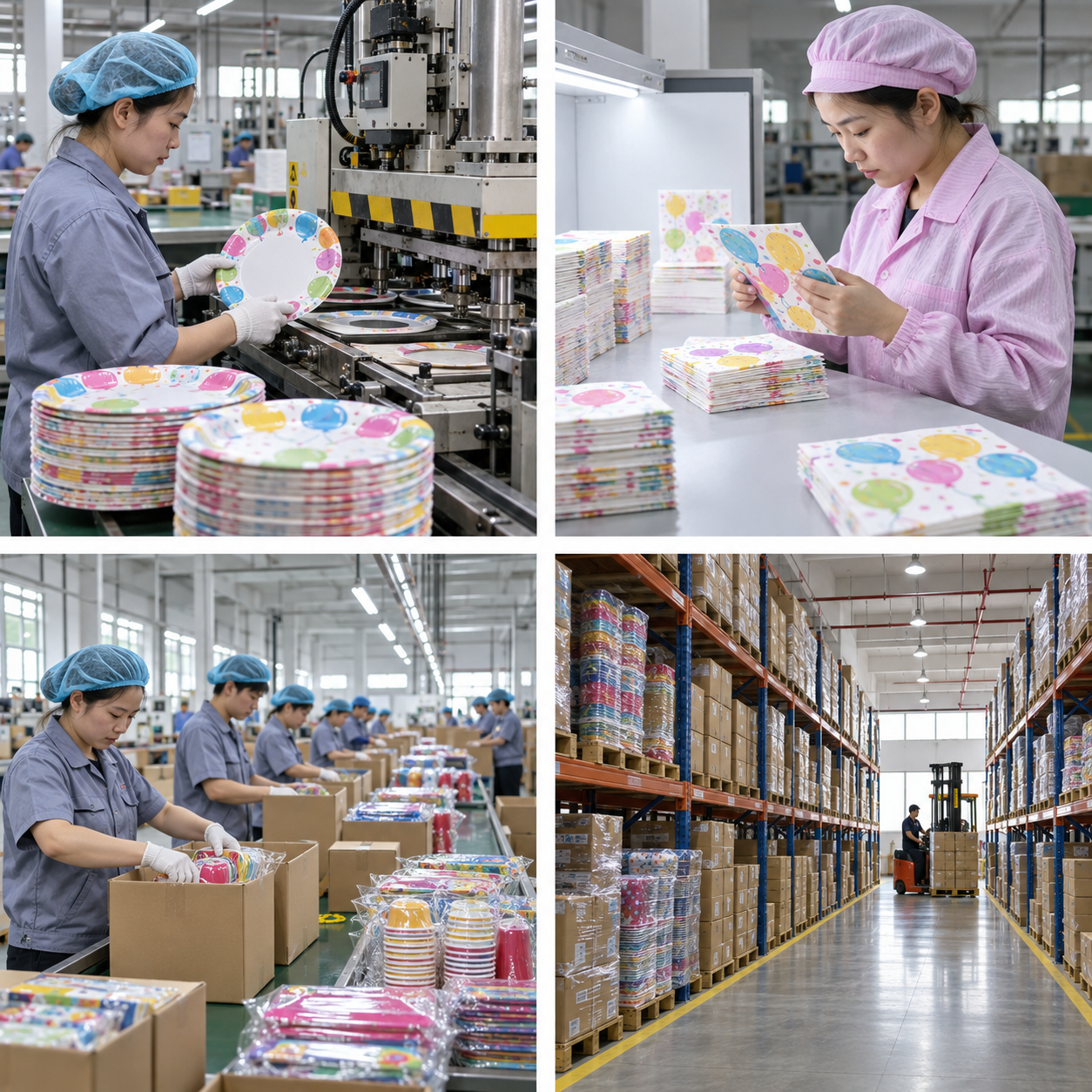
Ask for the evidence that matters to this product: physical sample checks, controlled artwork references, count-control steps and the shipment inspection point. A reliable answer is specific to the selected SKU, material and destination market.
Have a product reference, quantity and target market? Ask PartyHue for a product review before moving to bulk production.
4. Review the product in its real application
Start a first import with a controllable assortment. A few coordinated SKUs can test supplier communication, packaging and shipment flow while giving the buyer meaningful sales data for a broader repeat order.
Before approving production, prepare the product the way a customer or warehouse will experience it. Set up a decoration, inflate a balloon, assemble a kit or review a full retail pack. This application review is often where small issues in count, color, presentation or instructions become clear.
5. Make shipment preparation part of the product plan
Freight is only one part of import readiness. Confirm product release, packing-list accuracy, carton marks and inspection result before the cargo reaches the forwarder. A missed label or wrong pack count can be more costly than a small freight variance.
Compare landed-cost assumptions, not only unit prices
A quotation becomes useful when it can be compared on the same basis. Check the product and pack configuration, carton dimensions, gross weight, inspection scope, delivery term and destination assumptions. An apparently lower unit price can lose its advantage if the pack is inefficient, the carton data is incomplete or a required handling step was left outside the quote.
For each order, agree the cargo-ready definition, final inspection timing and release authority before the forwarder booking becomes urgent. Our factory and quality overview explains the practical checkpoints PartyHue uses to support export-ready party supplies.
For an independent reference relevant to this decision, see the U.S. Commercial Service Incoterms reference.
Buyer FAQ
What should a first-time importer prepare?
A clear product brief, destination market, quantity, timeline, packaging requirement and logistics contact or route.
How early should I start?
Start early enough to accommodate sample review, production, inspection and transit for the intended selling season.
Who handles compliance?
Responsibilities depend on the product, market and buyer role. Confirm the scope for the selected SKU instead of relying on a blanket statement.
Conclusion
Send PartyHue your launch date, product list and destination market for a realistic sourcing and shipment sequence. For related sourcing questions, see the PartyHue buyer FAQ or contact our team with the product reference, quantity, destination market and launch date.
READY TO PLAN THE NEXT ORDER?