 PARTY
PARTY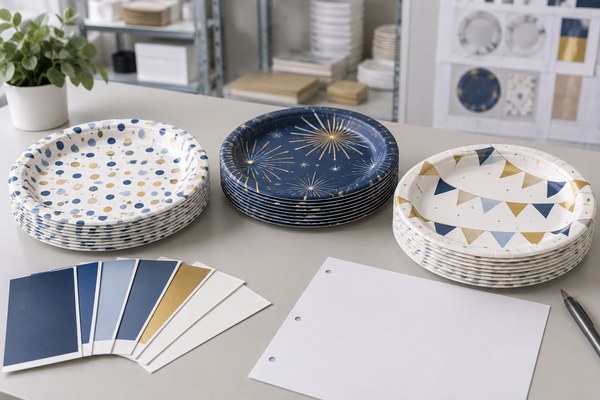
Custom printed paper plates need more than a pattern approval. Plate diameter, board feel, print coverage, rim behavior, coating choice, pack count and retail presentation each influence the quotation and the sample. A clear brief helps buyers compare similar-looking offers accurately.
1. Define the buying decision before requesting a quote
Define the intended application before choosing a specification. A dessert plate, meal plate and display-oriented party plate may use different dimensions, rigidity and print treatments. Do not ask for a generic paper plate if a retail customer expects a particular use and presentation.
For an accurate comparison, connect the product to the commercial outcome: the sales channel, customer profile, purchase quantity, required date and the way the item will be presented. Use our party supplies product range to shortlist categories, then carry those details into one controlled buying brief.
2. Build a specification a factory can act on
Strong sourcing work makes assumptions visible. The following points give a factory enough context to identify a viable route, prepare a relevant sample and explain which variables affect cost or timing.
- Diameter and shape, including any tolerance the buyer needs for coordinated table settings.
- Material description, food-contact expectations and any coating or finish requirement.
- Artwork coverage, rim placement, color reference and print-side instruction.
- Pieces per retail pack, pack seal, barcode location and carton configuration.
Keep the buyer requirements in a versioned file. If the order changes, update the file rather than relying on a message thread. This simple habit makes the sample, quotation and shipment inspection easier to compare.
3. Use factory testing to reduce rework
During sample review, stack plates and view the printed surface under neutral light. Look for registration at the rim, edge cleanliness, color consistency and whether the pack protects the top plate. The product application matters: a plate that photographs well can still feel too light or inconsistent in normal handling.
Turn approval into an observable process
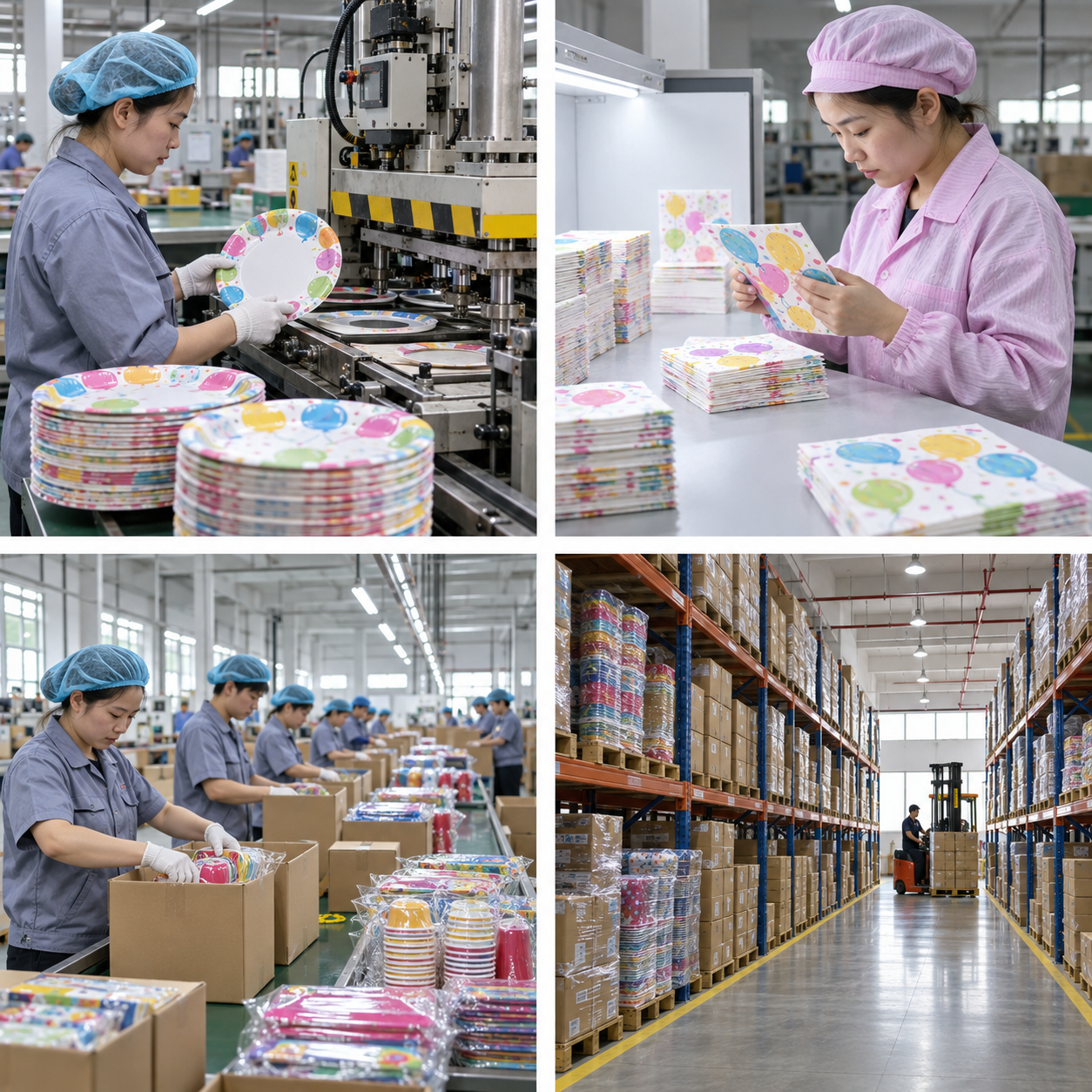
For custom printed paper plates wholesale, the useful question is not simply whether a supplier performs quality control. Ask which checkpoint applies to the item, who owns the reference sample and what happens if a result differs from the approved brief. A photo alone is not a release decision; it should be tied to a sample, count, measurement, print reference or packing instruction that both sides can identify.
Keep the commercial and technical records connected. The quotation should describe the same pack count, material, artwork version and outer-carton assumption used for the sample. When a customer requirement changes, note the change before production continues. This creates a practical audit trail without turning a straightforward party program into unnecessary paperwork.
Ask for the evidence that matters to this product: physical sample checks, controlled artwork references, count-control steps and the shipment inspection point. A reliable answer is specific to the selected SKU, material and destination market.
Have a product reference, quantity and target market? Ask PartyHue for a product review before moving to bulk production.
4. Review the product in its real application
Retail buyers often pair printed plates with matching cups and napkins. Keep the shared color reference and design version in one collection file so the three items are not approved independently and then found to clash on shelf.
Before approving production, prepare the product the way a customer or warehouse will experience it. Set up a decoration, inflate a balloon, assemble a kit or review a full retail pack. This application review is often where small issues in count, color, presentation or instructions become clear.
5. Make shipment preparation part of the product plan
For export packing, confirm whether plates are packed flat, how packs are protected from compression and whether carton marks identify design, pack count and destination. These details support warehouse receiving and repeat-order control.
Compare landed-cost assumptions, not only unit prices
A quotation becomes useful when it can be compared on the same basis. Check the product and pack configuration, carton dimensions, gross weight, inspection scope, delivery term and destination assumptions. An apparently lower unit price can lose its advantage if the pack is inefficient, the carton data is incomplete or a required handling step was left outside the quote.
For each order, agree the cargo-ready definition, final inspection timing and release authority before the forwarder booking becomes urgent. Our factory and quality overview explains the practical checkpoints PartyHue uses to support export-ready party supplies.
Buyer FAQ
What should I send for a paper plate quote?
Send the target size, shape, artwork status, quantity per design, pack count, market and required delivery date.
Can paper plates match a custom color palette?
Color matching should be evaluated on a physical sample with a stated reference. Material and print method can affect the final appearance.
Are food-contact documents automatic?
Documentation must be confirmed for the selected material, intended use and destination market; it should not be assumed from a generic product category.
Conclusion
Ask PartyHue for a paper-plate sampling route with your size, print, pack and market requirements. For related sourcing questions, see the PartyHue buyer FAQ or contact our team with the product reference, quantity, destination market and launch date.
READY TO PLAN THE NEXT ORDER?